Paint thickness gauge
CTG-1
With the paint thickness gauge you can measure paint thickness quickly and easily. Almost an essential tool for car detailers. WE RECOMMEND IT!
The Tokya CTG-1 is a measuring device that tells you the thickness of the paint. A paint thickness gauge can be used to measure the total thickness of the paint, lacquer and coating on top of the sheet metal. With the gauge it is very easy to detect, for example, filled or repainted areas on a car. The gauge works on the most common iron and metal-based surfaces (Fe and NFe). The gauge can measure layers of up to 2 mm, with an accuracy of 0.02 mm.
Available from Autodude in four countries

Each store serves its own country with local delivery, prices, returns and customer service.
Specifications
| What | Paint thickness gauge Tokya CTG-1 |
|---|---|
| Intended use | For measuring paint and lacquer layers |
| Measuring range - 0~2mm | |
| Accuracy - ±(2%+0.02mm) | |
| Resolution - 0~2000 μm (10μm) | |
| Units - um, mm, mils | |
| Batteries - 2 x AAA battery | |
| Approvals - CE, ROHS, ISO 2178, 2360, GB/T 4956-2003, 4957-2003 | |
| Storage environment - Temperature | -10 - 60°C |
| Humidity | 20% - 90% rh. |
| Operating environment - Temperature | 0 - 50°C |
| Size/Weight/Material/ - 89 mm X 49 mm X 21 mm/45 g/ABS plastic | |
| Battery status | 3 bars: battery OK. 1 bar: replace the batteries. |
| Warranty | 12 months |
As declared on the Autodude product page.
Quick guide
- Using the device:
- Always make sure the device is calibrated before you start measuring. Calibration instructions are in the user manual.
- To measure, gently press the gauge against the paint surface, making sure the gauge is perpendicular to the surface. Repeat the measurement in several places. For example, it is good to take dozens of measurements on the bonnet, from different parts of the bonnet. It is worth recording the results in a map-like form so that you can monitor the thinning of the surface during polishing.
- Measuring is not rocket science, it is easy and pleasant!
- Next, DUDE's tips for measuring:
- Clear-coated paint surfaces:
- The paint surface is usually built up as follows: there is a primer at the bottom, then the actual paint, and finally the lacquer that creates the gloss. You should not damage the clear coat of a car, as it does not look very nice. The paint thickness gauge therefore measures all of these layers in a single measurement, but does not tell you the thickness of the lacquer alone.
- Often a good way to check the average thickness of the lacquer is to take measurements from, for example, under the bonnet, where there is no lacquer layer but the primer and paint are present. By measuring there you learn the thickness of the layer formed by the primer and paint. ALWAYS measure in several different places and calculate the average thickness from them. Once you know the layer thickness formed by the primer and paint, it is easy to calculate the average thickness of the lacquer layer on top by measuring the surface on the outer panels. Always take measurements in several places, as the thickness of the paint and lacquer varies slightly.
- Layers of clearly differing thickness may also be found under the paint surface, which usually indicates later repainting, sanding, filling or a similar repair. Polishing such areas must be done with great care.
- Single-stage (direct gloss) painted surfaces:
- You can easily measure single-stage painted panels directly from the paint surface. Note, however, that the primer is also included in the measured result. If you find a panel somewhere with only primer, you can take a measurement in the same way as on clear-coated cars, which gives you a thickness closer to the truth for the actual paint surface.
Source: Autodude quick guide on the product page.
Related Tokya products
-
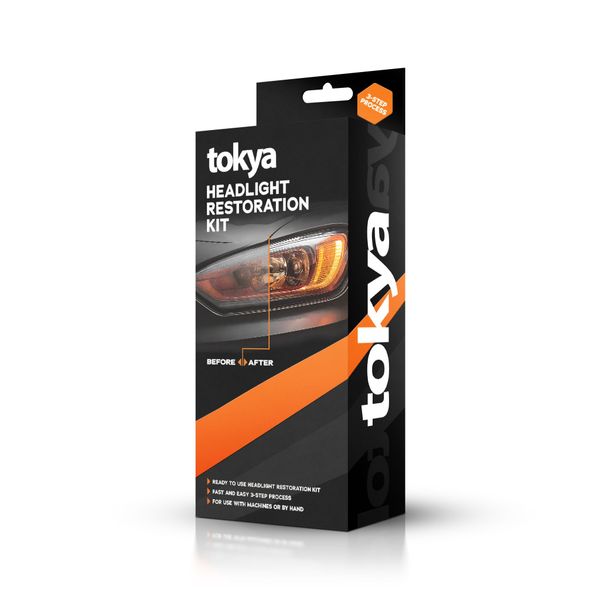
Headlight restoration kit
Headlight Restoration Kit
An easy-to-use polishing kit for plastic headlight lenses. This pack includes everything you need to sand, polish and…
-

Paint pen / touch-up pen
Scratch Repair Pen
A very easy-to-use and precise repair pen for touch-up painting of car paintwork and other painted surfaces.
-
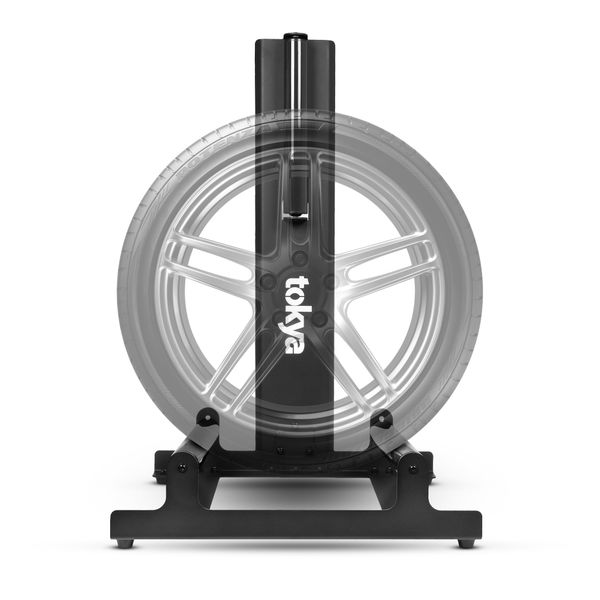
Wheel stand
Wheel Stand
A very handy and sturdy stand for washing, protecting, servicing or even painting wheels. Extra-wide rollers allow the…
-
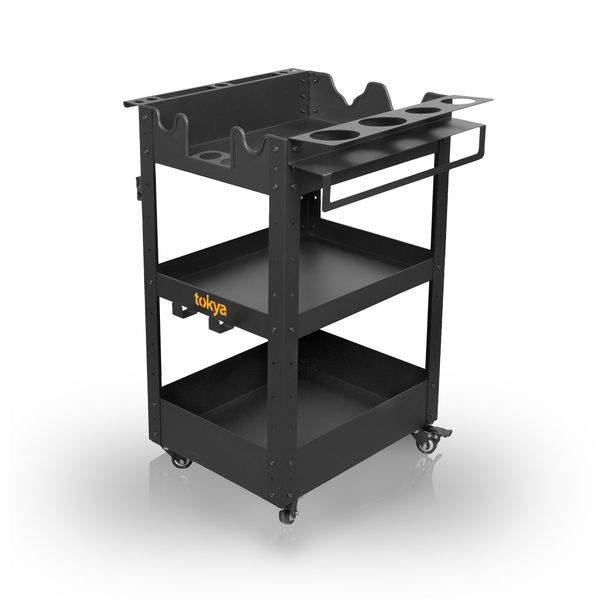
Detailing trolley
Detailing Trolley - 3 tiers
High-quality detailing trolley equipped with three shelves, four hanging points for polishing machines and several…